📑 In this guide
Start with our AI Confidence Quiz
AI is already part of your child’s learning. In just a couple of minutes, discover where your family stands and what to do next.
- ✓ Your family’s AI Confidence Score
- ✓ What you’re already doing well
- ✓ Simple, practical next steps
AI Tutors: Is the Tool Helping Your Child Learn or Just Finish the Work?
AI has the potential to give children valuable support with learning.
A well-designed AI learning tool can provide practice, explain difficult ideas in different ways, and help a child work through a problem at the right level. It may give children more opportunities to learn at their own pace and receive support when an adult is not immediately available.
However, not every tool described as an "AI tutor" supports learning in the same way.
Some tools help children think. Others mainly help them finish the task.
Understanding the difference can help you choose AI tools that strengthen your child's learning instead of reducing their independence over time.
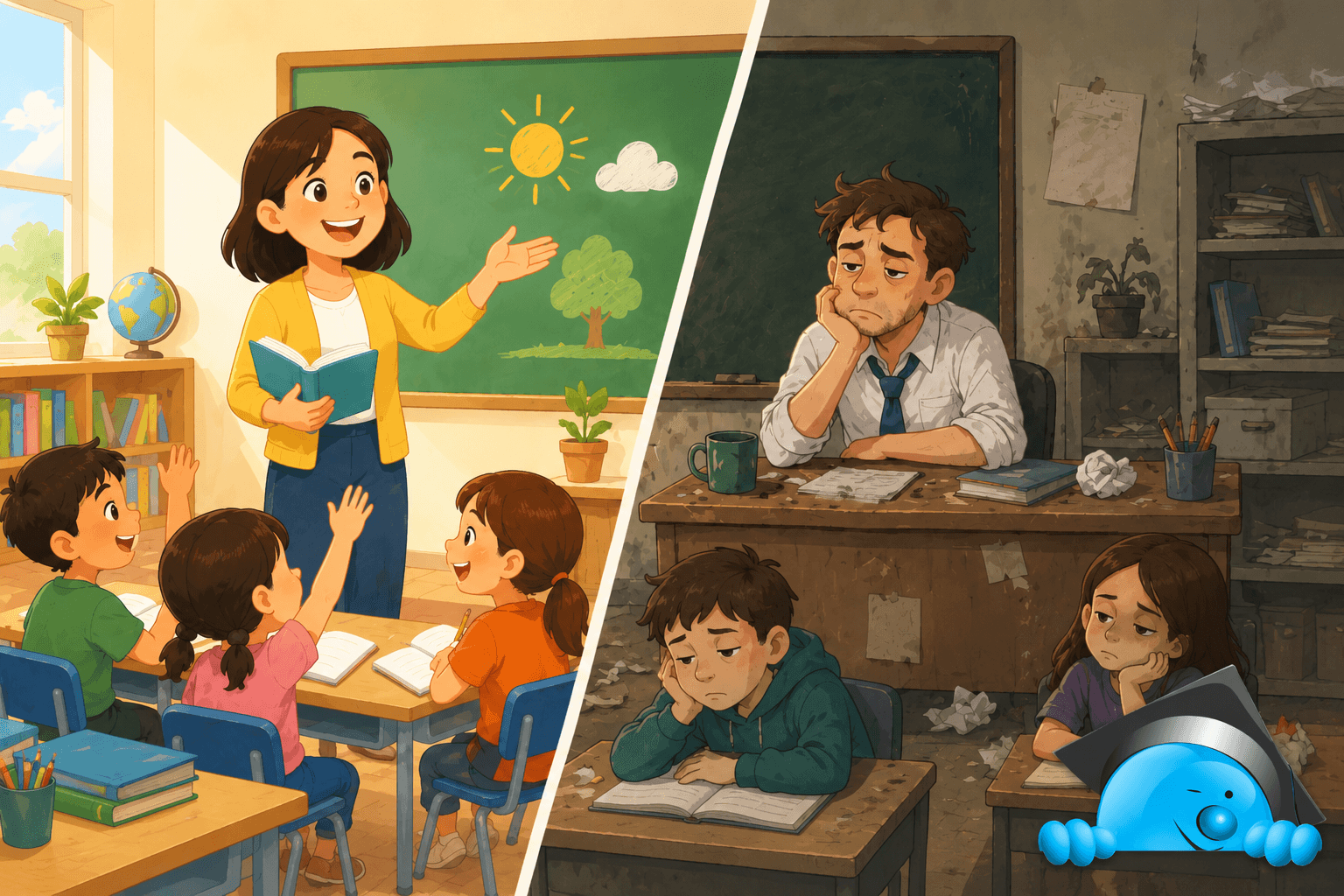
Imagine two different teachers
The easiest way to understand the difference is to imagine two teachers.
Both teachers can help your child complete a piece of work. Only one is helping your child become a stronger learner.
The good teacher

A good teacher keeps the level of challenge right for your child.
They do not make the work so easy that your child stops thinking. They also do not make it so difficult that your child becomes stuck or loses confidence.
When your child has difficulty, the teacher might:
- Break the problem into manageable steps.
- Give a useful hint without revealing the answer.
- Show a different way of looking at the problem.
- Ask your child to explain their thinking.
- Check whether your child can use the idea again independently.
This teacher understands that completing a task is not the same as learning from it.
They know that real understanding means your child can explain what they did, why it worked and how they might use the same idea in a new situation.
Praise is not only given for getting the answer right or finishing quickly. The teacher also notices effort, careful thinking, useful mistakes and improved understanding.
The poor teacher

Now imagine a teacher whose main aim is to get the work completed as quickly as possible.
When your child struggles, this teacher may give away too much of the answer. A supposed “hint” might simply repeat the question using slightly different words, without offering a new way to think about it.
When your child produces the right answer, the teacher quickly praises them and moves on.
But the teacher does not check:
- Whether your child understood the process.
- Whether they could explain the answer.
- Whether they could solve a similar problem tomorrow.
- Whether they completed the work themselves.
- Whether the task provided enough challenge.
The work may look successful. It may be completed quickly and receive a high score.
However, your child may have learned very little.
Which teacher is inside the AI tool?
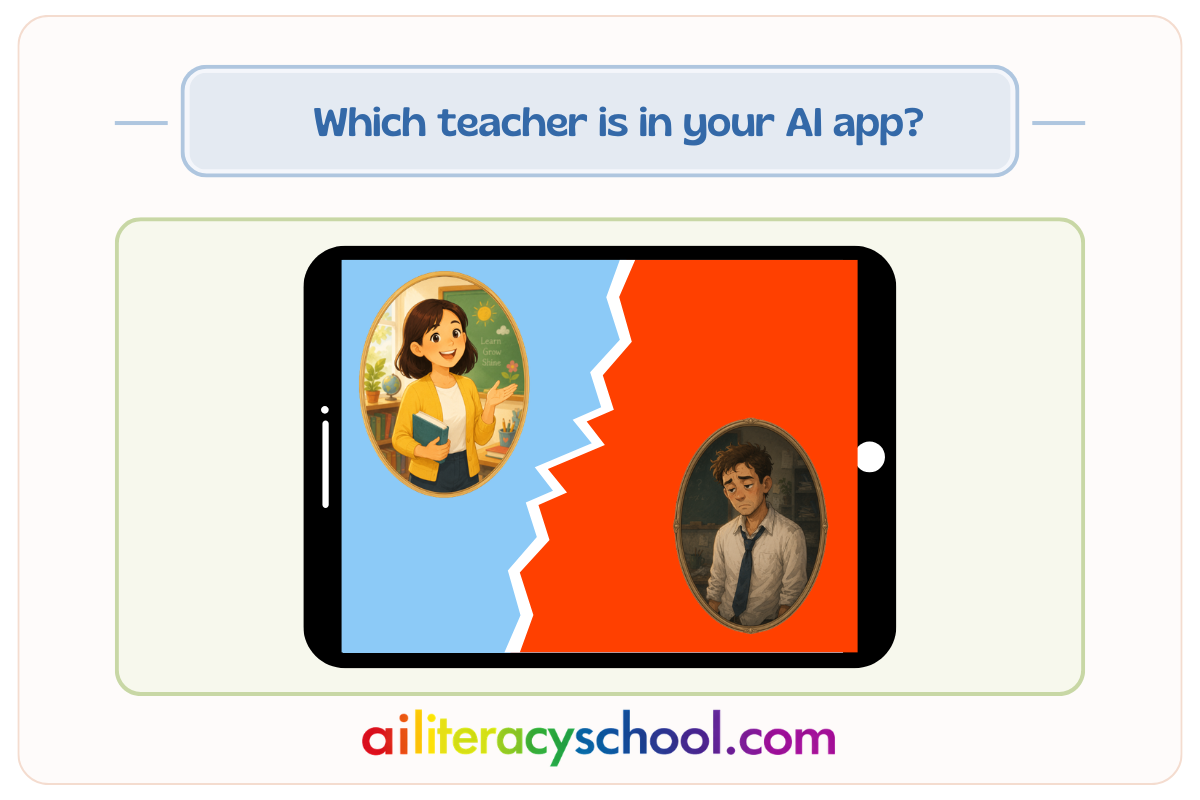
AI learning tools can behave like either of these teachers.
A good AI tool is designed to support your child’s thinking. It may provide prompts, questions, examples and carefully chosen hints. It should help your child make progress without solving the work for them.
A poor AI tool may focus on producing fast answers and finished work. It can make a child appear more successful while they are using it, even though they are becoming less able to work independently.
This is why the words “AI tutor” do not tell you very much on their own.
Two products may both describe themselves as AI tutors while providing completely different types of support. Even the same underlying AI technology can produce very different results depending on how the tool has been designed.
Performance is not the same as learning
Research is beginning to show why this distinction matters.
Some studies have found that students using AI can complete homework more quickly and achieve higher homework scores. However, when their knowledge is tested without the AI tool, their results can fall.
In other words, AI may improve the quality of the work while doing little to improve what a child learns.
Research has also compared different ways of using the same AI technology. When students could rely on it too freely, they performed less well once the support was removed. When the AI was designed to provide guidance and hints rather than answers, students received useful support without the same loss of independent ability.
The lesson for parents is simple:
A tool that helps your child complete more work is not necessarily helping your child learn more.
How harmful support can be difficult to notice
Poor AI support may not look harmful at first.
Your child may:
- Finish homework faster.
- Produce more polished answers.
- Get more questions correct.
- Feel less frustrated.
- Receive enthusiastic praise from the tool.
These outcomes can all feel positive. However, they do not prove that learning has happened.
The difficulty may only become clear later, when your child has to complete a test, explain the idea to a teacher or solve a similar problem without AI support.
This does not mean that speed, confidence or successful work are unimportant. It means they should be accompanied by understanding and growing independence.
What good AI learning support should do
A strong AI learning tool should help your child become more capable and less dependent on support.
It should encourage your child to:
- Think before receiving help.
- Work through manageable steps.
- Try another approach when the first one fails.
- Explain how they reached an answer.
- Notice and correct mistakes.
- Practise without always being shown the solution.
- Complete similar tasks without the tool.
The best support gradually becomes less necessary as your child’s understanding grows.
That is what a good teacher aims for, and it is what a good AI learning tool should aim for too.
Why parents need to be informed
Parents do not need to become AI experts or understand how the technology works behind the scenes.
You do, however, need to know what questions to ask.
A product may use impressive language about personalisation, instant feedback or intelligent tutoring. These claims do not automatically tell you whether it protects challenge, encourages explanation or builds independent learning.
Being informed helps you look beyond the marketing and consider what the tool is actually asking your child to do.
You can ask:
- Does it give answers too easily?
- Do its hints encourage a different way of thinking?
- Does it ask my child to explain their reasoning?
- Does it adjust the challenge without removing it?
- Does it check understanding rather than just correct answers?
- Could my child complete a similar task without the tool?
- Is my child becoming more independent or more reliant on it?
These are not technical questions. They are learning questions.
Parents are well placed to ask them because you know your child, can observe how they use the tool and can notice whether it is helping them grow.
Choose the equivalent of the good teacher
AI could become a valuable part of your child’s education. It may provide extra explanations, targeted practice and useful support when chosen and used carefully.
However, the wrong tool can encourage shortcuts, remove necessary challenge and create the appearance of achievement without the understanding that should sit underneath it.
The goal is to choose AI tools that support learning in the right way.
Our Choose AI Tools With Confidence learning pathway helps you recognise the difference between tools that genuinely support progress and those that may interfere with it.
You will learn how to look beyond product claims, examine the kind of support an app provides and decide whether it behaves more like the good teacher or the poor one.
Once you know what to look for, you can choose tools that help your child think, practise, explain their reasoning and gradually become independent learners.
That is how AI becomes a tool for learning rather than simply a tool for finishing.
Was this guide helpful?
Let us know whether this article helped you.
Share this guide with other parents
Know a parent who would find this guide helpful? Enter their email address and we'll send them the Parent Conversation Guide directly.