📑 In this guide
Start with our AI Confidence Quiz
AI is already part of your child’s learning. In just a couple of minutes, discover where your family stands and what to do next.
- ✓ Your family’s AI Confidence Score
- ✓ What you’re already doing well
- ✓ Simple, practical next steps
AI is already changing how adults write, research, plan, design, code, organise information and solve problems. This often involves generative AI, the type of AI that creates text, images, video or code. Our AI Word Explainer can help you explain generative AI to your child.
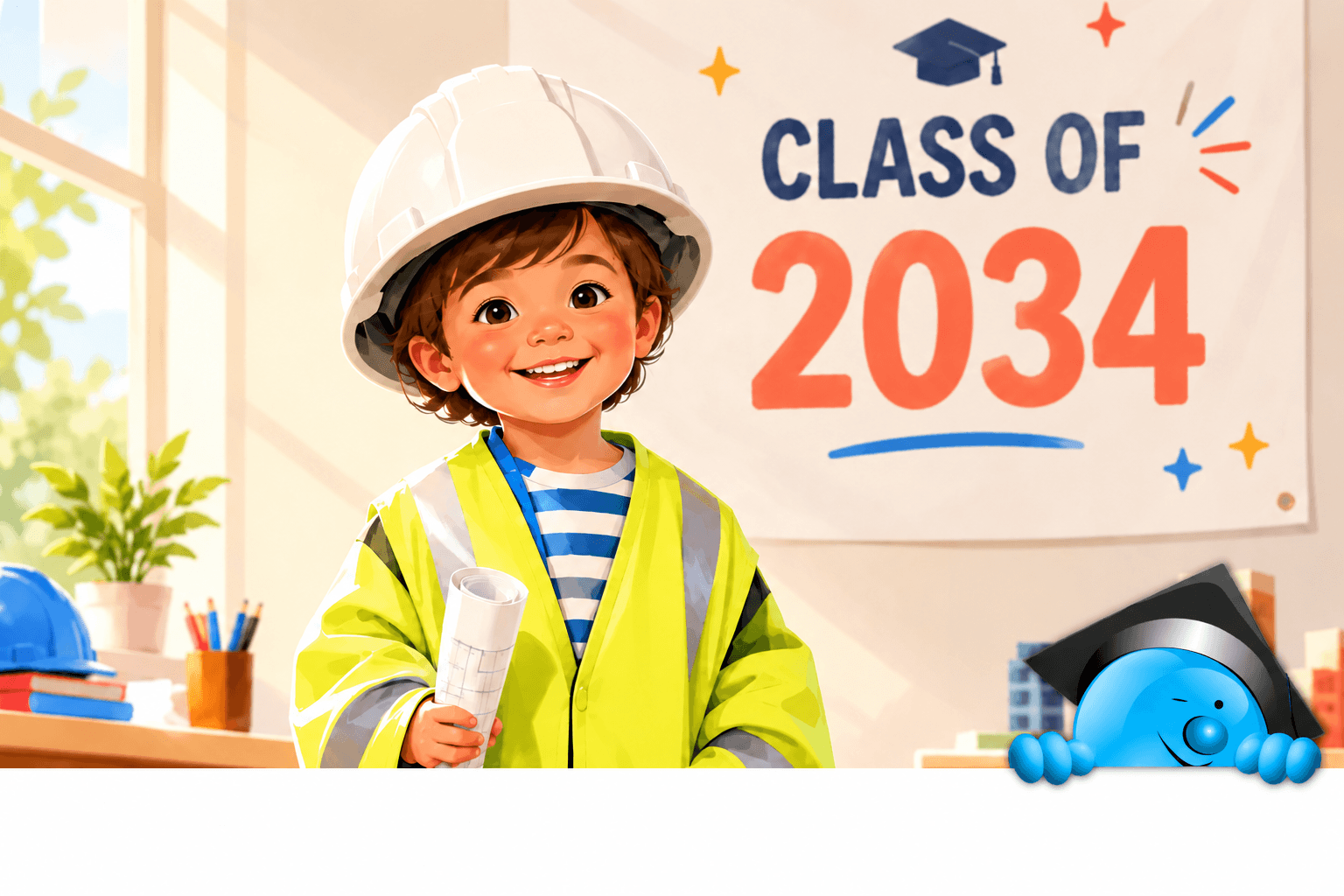
By the time today’s primary-school children are adults, many jobs will look different. Parents can help children prepare by encouraging them to ask questions, learn new things and use tools carefully. There is no need to predict their future career.
How AI is changing work and jobs
The idea of learning a subject, getting a qualification and doing one job for life is becoming less reliable. AI may take over some tasks previously done by people, especially routine writing, sorting, summarising, checking and first-draft work. New kinds of work are also appearing, and many existing jobs now involve using AI.
Some workplaces are beginning to use AI agents, which can plan and complete several steps towards a goal. The AI Word Explainer provides a simple definition of AI agents for parents and children.
Primary-school children have plenty of time before they need to make career decisions. For now, they need opportunities to think for themselves, communicate clearly, solve problems and understand the technology around them.
How to think about your child’s future
Children will need to learn unfamiliar tools and adapt as work changes. Curiosity and a willingness to keep learning will help them do that.
Getting an answer quickly is only part of a task. Your child also needs to judge whether the answer is useful, explain their thinking and work with other people. You can help them practise these skills through everyday conversations, schoolwork and play.
Which skills can you help your child develop?
For primary-school-aged children, everyday learning provides useful preparation for later life. Skills to encourage include:
- Curiosity: Wanting to know how things work.
- Communication: Explaining ideas clearly.
- Critical thinking: Asking, “Is this true?” and “How do we know?”
- Creativity: Making, imagining and trying different approaches.
- Problem-solving: Sticking with a challenge before asking for help.
- Collaboration: Listening, sharing and building on other people’s ideas.
- Digital judgement: Knowing that online tools can be useful and wrong.
- Privacy awareness: Understanding that personal information should be protected.
- Self-confidence: Believing they can learn new things, even when tools change.
These skills help with school, friendships and everyday decisions. They will also help children use AI carefully as they get older. Our parent guide to AI and thinking skills explains how to practise them with your child.
How AI literacy helps
AI literacy means understanding what AI tools can do, where they can go wrong and how to use them responsibly. Our AI Word Explainer offers a parent-friendly definition and a simple explanation to share with your child: Look up AI Literacy.
Children can learn about AI without learning to program. They can begin by understanding why an AI answer needs checking, what information should stay private and when using a tool could interfere with their learning.
Using AI poorly can cause problems. A child who submits AI-written homework may face accusations of cheating. A child who regularly relies on AI for answers may miss opportunities to practise thinking independently.
Used carefully, AI can help with routine tasks and leave people more time to use their knowledge and skills. Learning to judge when help is useful takes practice.
Children under 13 should not use general chatbots independently. Any shared use should be led by a parent on an adult account, with the adult present. Choose a clear purpose and talk about what the tool produces.
When the subject comes up at home
Your child may hear that AI can do homework, write stories, make pictures or answer questions. They may see it in search tools, learning apps, games or devices.
They might ask whether robots will take everyone’s jobs, or wonder why they need to learn something that AI can do. You can explain that people still need enough knowledge to check AI’s work and decide how to use it. They also remain responsible for their choices.
What parents can do now about AI
1. Build your own AI literacy
Learning how AI works can make it easier to answer your child’s questions. Try using an AI tool yourself for a low-risk task, such as planning a family meal, simplifying an explanation or creating practice questions.
As you use it, notice:
- What it does well.
- Where it sounds too confident.
- What you still need to check.
- What information you should not share.
- Which decisions you need to make yourself.
Your child can learn from watching you question an answer and explain why you would check it.
2. Explain that AI can make mistakes
Children need to understand that AI does not think in the same way a person does. A confident answer can still be wrong.
You could say:
AI can be useful, but it does not know whether it is right. We still have to check.
Or:
AI can give us ideas, but it should not do our thinking for us.
Encourage your child to question AI suggestions and discuss which ones are worth using.
3. Give your child time to think
If AI supplies finished answers too quickly, children may miss the practice they need to understand a task. A simple family rule could be:
Try first, then ask for help.
Before using AI to support learning, ask your child:
- What do you already think?
- What have you tried?
- What part are you stuck on?
- What would help you understand, without doing it for you?
Their answers can help you decide whether they need a hint, an explanation or more time to work it out.
4. Practise checking
Help your child get used to checking information, especially when an answer sounds convincing. You can ask:
- Where else could we check this?
- Does this answer make sense?
- What might be missing?
- Could there be another view?
- Who would know more about this than AI?
It can also help to ask whether an answer shows bias, meaning it may be unfair, unbalanced or based on limited examples. Our AI Word Explainer offers an accessible explanation of AI bias for parents and children.
Checking together shows your child how to investigate an answer before accepting it.
5. Keep privacy rules simple
Children need clear privacy rules before using any AI-supported tool. A simple rule could be:
We do not put private family information into AI.
That includes names, school details, addresses, passwords, photos, medical information, worries about friends or anything that could identify your child or another person.
For younger children, you might say:
If we would not put it on a poster outside school, we should not put it into an AI tool.
6. Make time for everyday experiences
Children need opportunities to read, play, build, draw, move and try things for themselves. Working through disagreements, making mistakes and trying again also help them learn.
AI cannot replace friendships, teachers or adults who listen. Keep time for these relationships and for activities away from screens.
Things you can say to your child about AI
- “You have plenty of time to think about jobs. For now, keep exploring what interests you.”
- “People are responsible for what they do with an AI answer.”
- “Let’s see what AI suggests, then we’ll decide what we think.”
- “Before we ask AI, let’s hear your idea first.”
- “Using AI well means asking good questions and checking the answers.”
- “Some jobs will change. Learning new things will help you when that happens.”
Questions to talk about together
Choose one or two questions when the subject comes up naturally:
- What do you think AI is good at?
- What do you think AI might get wrong?
- When should a person make the final decision?
- What jobs do you notice people doing around us?
- Which parts of those jobs need kindness, trust, creativity or responsibility?
- How could AI help someone do a job better?
- When would using AI be unfair?
- What information should we keep private?
- What is something you can do that a machine cannot really understand?
Give your child time
Your child does not need to choose a career early, learn advanced AI tools or turn every interest into a future job plan. They can learn about technology gradually, with your guidance.
You can admit when you do not know an answer and look for reliable information together. This gives your child an example of how to approach something unfamiliar.
A useful starting point for parents
Help your child become comfortable with learning new things. When they meet an unfamiliar tool or task, encourage them to ask questions, have a go and explain what they have understood.
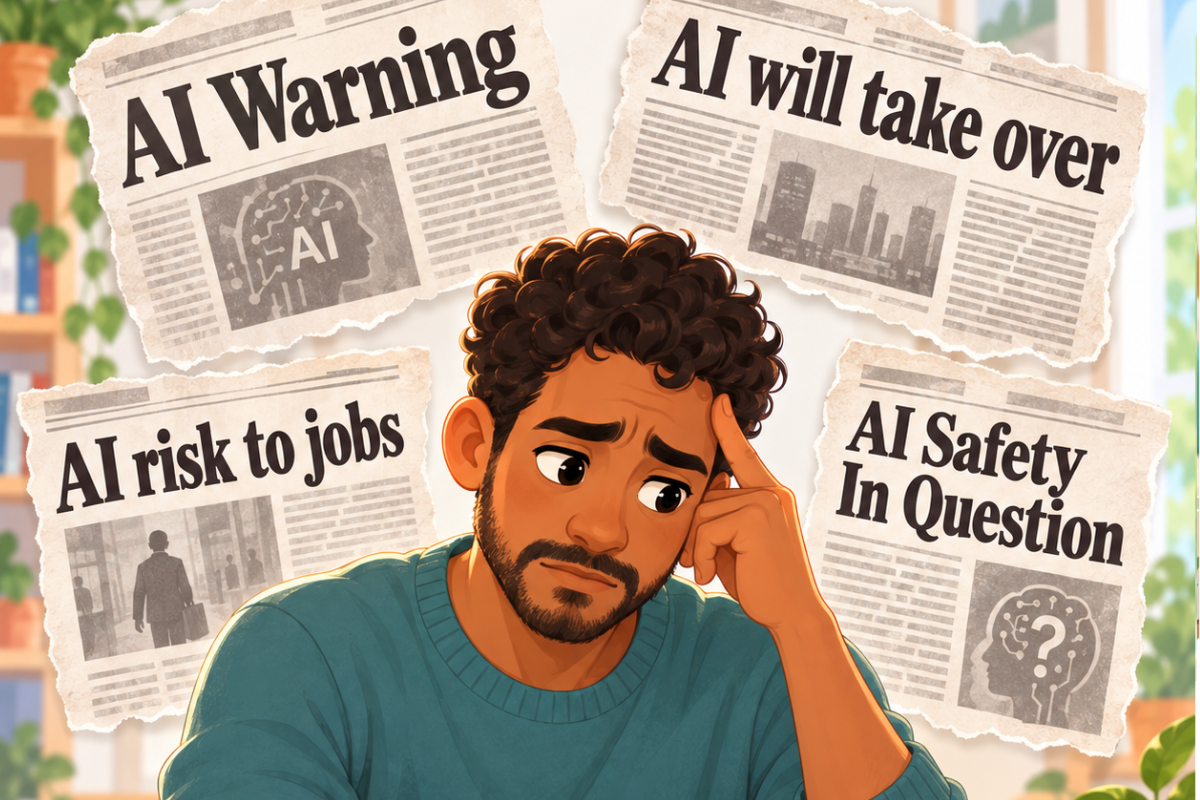
Your own AI literacy can help you guide these conversations. If you are worried about AI’s effect on your children’s future, our guide Are you a parent anxious about AI? can help you keep those concerns in perspective.
Preparing for a changing future
AI will probably affect the way many adults work. Some tasks may disappear, jobs may change and new roles may appear. Nobody can tell your child precisely what that will mean for their career.
You can help them now by giving them opportunities to think independently, solve problems and make decisions. Choose one ordinary moment this week to practise: ask how they checked a fact, let them explain a solution or talk through a decision together.
Our guide Should I Ban AI for My Child or Teach Them to Use It? will help you balance your children's safety against learning about AI to ensure they are prepared for the future.
Was this guide helpful?
Let us know whether this article helped you.
Share this guide with other parents
Know a parent who would find this guide helpful? Enter their email address and we'll send them the Parent Conversation Guide directly.