📑 In this guide
Start with our AI Confidence Quiz
AI is already part of your child’s learning. In just a couple of minutes, discover where your family stands and what to do next.
- ✓ Your family’s AI Confidence Score
- ✓ What you’re already doing well
- ✓ Simple, practical next steps
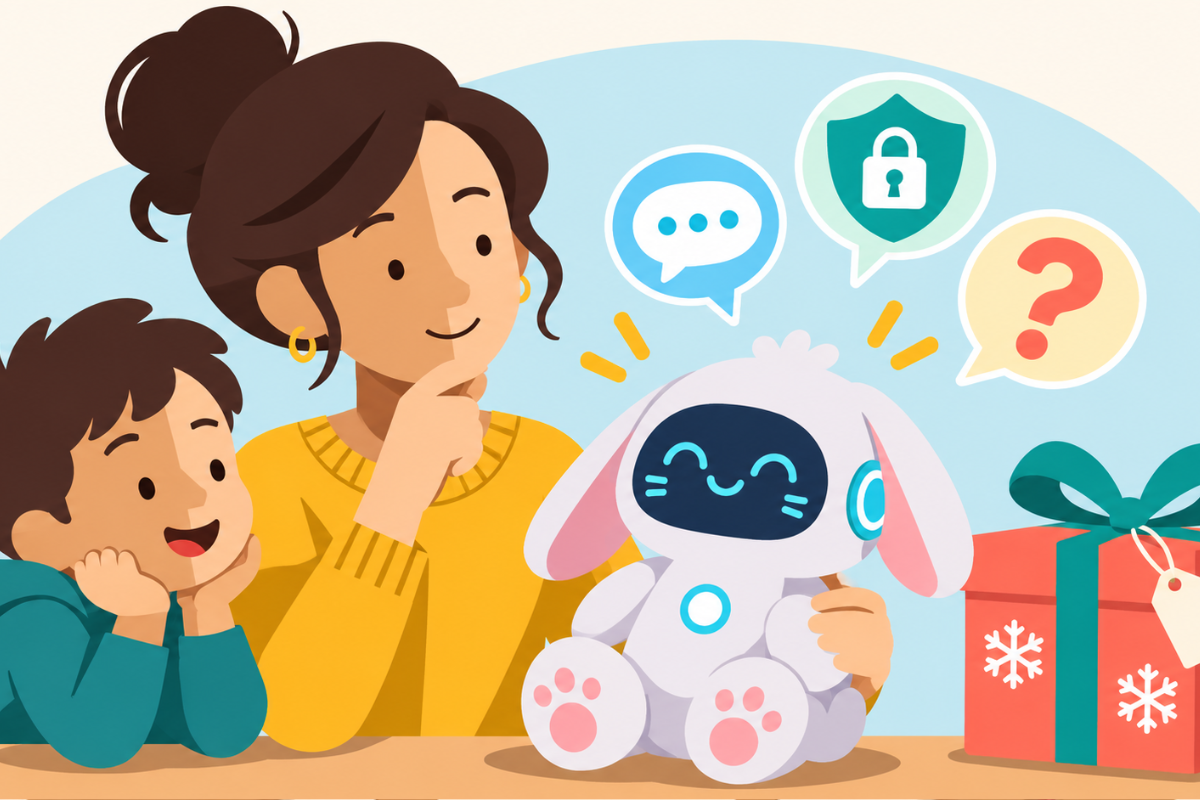
AI toys are appearing on more children's Christmas wish lists. From cuddly animals that talk back to clever little robots that answer questions, these toys promise fun, learning and even friendship.
It's only early November, but that's a good time to start looking more closely. Before Christmas advertising and last-minute gift shopping pick up, parents have an opportunity to understand what they're buying.
A recent article from the American Psychological Association raises concerns about AI-powered toys that imitate friendship, collect children's personal information and sometimes struggle to respond appropriately to young children.
Researchers also point out that we still know very little about the long-term effects of these toys on children's development.
That doesn't mean every AI toy is harmful. It does mean parents should look carefully at what a toy offers and how it works.
What makes an AI toy different?
Some traditional talking toys play recorded phrases when a child presses a button. Newer AI toys can generate their own replies, answer unexpected questions and sometimes remember earlier conversations.
That can make them feel surprisingly human. For young children, who are still learning about relationships and emotions, this raises some important questions.
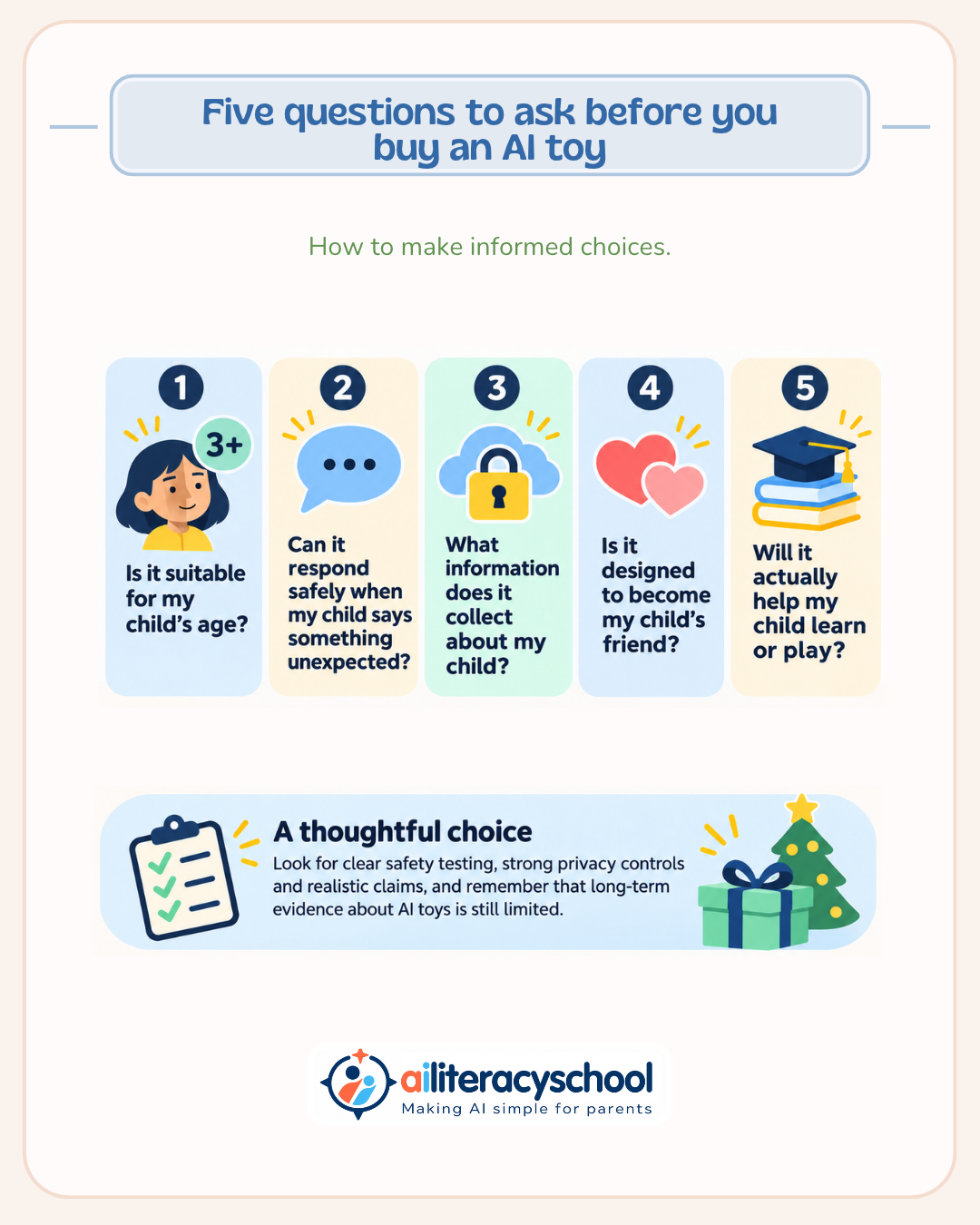
Here are five to ask before buying an AI toy for your child.
1. Is the AI toy suitable for my child's age?
A toy might be advertised for children aged three and above, but that doesn't necessarily mean its AI conversations have been properly tested for young children.
Young children are still learning to tell the difference between something that seems friendly and something that can genuinely understand their feelings.
What to check:
- What age does the manufacturer recommend?
- Has the AI been independently tested for children's safety?
- Does the toy have parental controls and clear limits on its conversations?
Our advice: Be particularly cautious about conversational AI toys for younger children. An age recommendation on the packaging is only a starting point.
2. Can the toy respond safely when my child says something unexpected?
Children ask surprising questions. They also say things that adults understand through tone of voice, facial expressions and the situation.
AI doesn't always understand those clues.
An AI toy might give an incorrect answer, misunderstand a child's feelings or respond in a way that isn't suitable for their age.
What to check:
- How does the toy handle questions about feelings, worries or unsafe activities?
- Can parents review conversations or control what topics the toy discusses?
- What happens when the AI doesn't understand a question?
Our advice: Look for evidence of proper safety testing. If the manufacturer cannot explain how it protects children from inappropriate responses, consider a different toy.
3. What information does the AI toy collect about my child?
An AI toy that holds conversations may need to process your child's voice. Depending on how it works, it might also save recordings, remember personal details or send information to online services. It could also pick up background conversations not meant for AI-based sharing.
Children may share information about their family, school, friends or feelings without understanding where that information goes.
What to check:
- Does the toy record or store conversations?
- Is information shared with other companies or used to train AI?
- Can you delete recordings and personal information?
- Can the microphone and internet connection be switched off?
Our advice: Read the manufacturer's privacy information before buying. Avoid products that are unclear about what happens to children's information. Encourage your child never to share private family details with an AI toy.
4. Is the toy designed to become my child's friend?
Some AI toys are marketed as companions. They might remember a child's favourite things, use affectionate language or encourage them to keep talking.
A friendly voice can make a toy appealing, but children may begin to believe it understands or cares about them in the same way a person does.
Psychologists are concerned that some children could form strong emotional attachments to toys that cannot offer the understanding and support of a real relationship.
What to check:
- Does the toy describe itself as a friend or suggest that it loves the child?
- Does it encourage children to share personal feelings or secrets?
- Does it encourage children to return for long conversations?
- How would your child deal with the toy becoming unavailable, such as if the manufacturer had to disable the cloud AI that powers it.?
Our advice: Help your child understand that an AI toy is a computer-powered product. It may sound caring, but it doesn't have feelings. Children need real people to turn to when they are worried, upset or need support.
5. Will the AI toy actually help my child learn or play?
Many AI toys promise educational benefits, from building language skills to improving problem-solving or creativity.
Some may offer enjoyable activities, stories and opportunities to practise skills. However, a toy being advertised as educational doesn't prove that it improves learning.
What to check:
- What will my child actually learn or practise with this toy?
- Is there independent evidence for its educational claims?
- Does it encourage my child's imagination, or mostly keep them listening and responding?
- Are there ongoing subscriptions or extra costs to use its features?
Our advice: Think about what your child enjoys doing. A toy that encourages building, pretending, creating or playing with others may offer more lasting value without needing AI at all.
If you decide to buy an AI toy
If you've considered these questions and still feel an AI toy is suitable, take time to explore it yourself before giving it to your child.
Set up the parental controls, check the privacy settings and try some conversations to understand how it responds.
For children under 13, keep any use of conversational AI directly supervised and shared with an adult, using an adult-managed account where required. Follow the product's age restrictions.
You can also help your child develop an important AI literacy skill by explaining that AI can sound convincing, friendly and clever while still making mistakes.
Watch how your child interacts with the toy and whether it encourages creative play or begins to take time away from other activities and relationships.
A thoughtful choice this Christmas
AI toys are developing quickly, and some of their features are impressive. But the research into their long-term effects on young children is still at an early stage.
Parents don't need to rush into buying the latest AI-powered toy simply because it's new or popular.
Before spending your money, ask whether the toy is safe, suitable for your child's age and likely to offer something worthwhile.
And remember, children can develop imagination, language, social skills and confidence through the toys and activities they already love.
Want to feel more confident about AI and your family?
Choosing AI Tools for Learning | Know What to Look For Before You Pay is our expert-made learning pathway for parents who want to understand how to support learning and avoid risks.
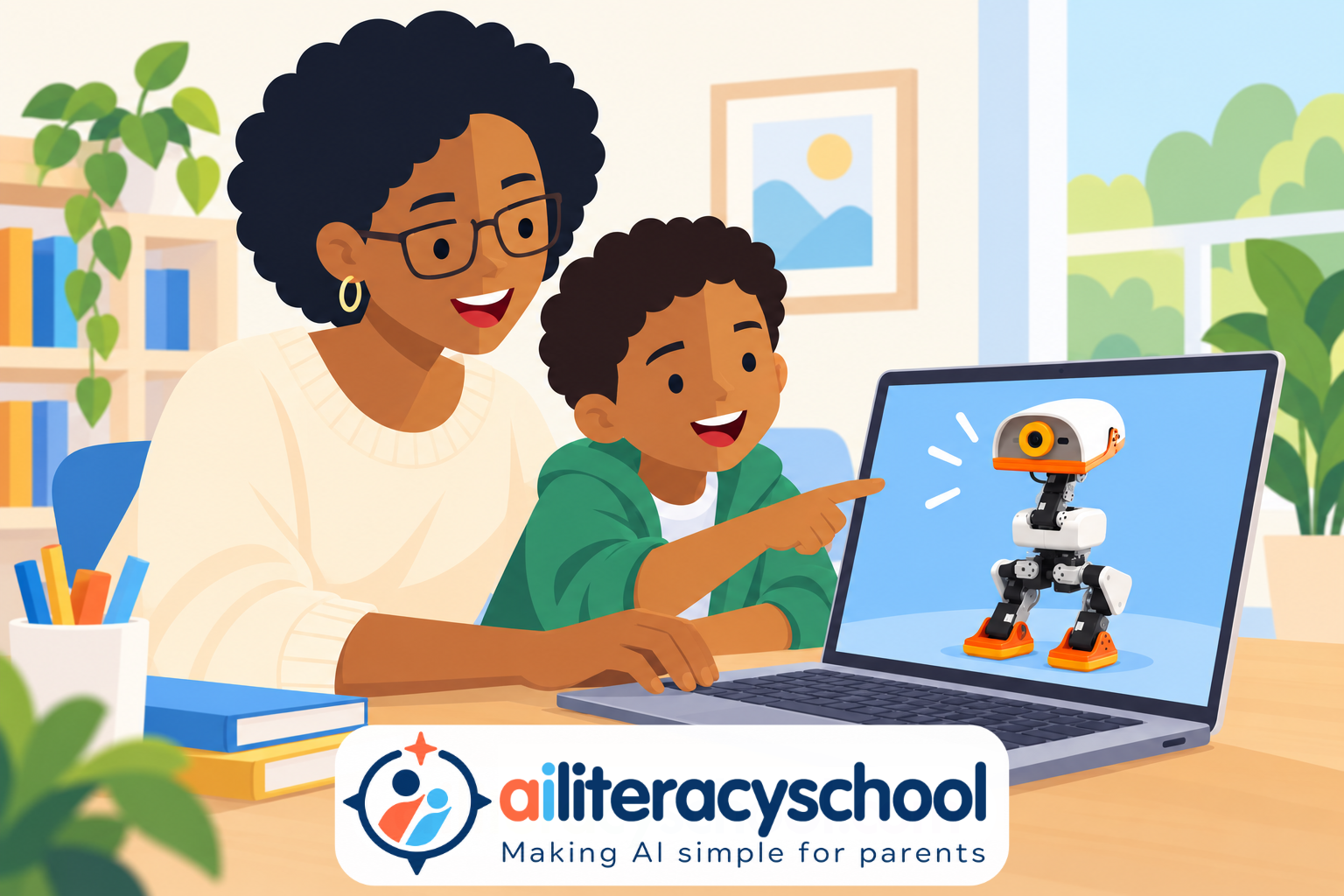
See our parent guide to Microduck, the AI robot backed by nVidia.
Was this guide helpful?
Let us know whether this article helped you.
Share this guide with other parents
Know a parent who would find this guide helpful? Enter their email address and we'll send them the Parent Conversation Guide directly.