
📑 In this guide
Start with our AI Confidence Quiz
AI is already part of your child’s learning. In just a couple of minutes, discover where your family stands and what to do next.
- ✓ Your family’s AI Confidence Score
- ✓ What you’re already doing well
- ✓ Simple, practical next steps
How your AI Literacy will improve in this lesson
Communication with teachers, tutors, and coaches is important, but parents often feel unsure about how to phrase concerns, how much to share, or how to keep the tone collaborative.
This lesson helps you move from vague requests to well-structured prompts that support clarity, confidence, and respectful partnership.
Before this lesson (Novice stage)
Parents often:
- write long or unfocused messages when emotions are high
- hesitate to reach out because they’re unsure how to express a concern
- ask AI to “write an email” and receive something that doesn’t sound like them
- avoid giving detail because they aren’t sure what’s safe
- accept early drafts even if the tone feels too formal, too demanding, or too vague
After this lesson (Skilled beginner using well-structured prompts)
Parents will be able to:
- shape the tone and purpose of AI responses by defining a Role
- give clear Instructions for the type of help they want
- provide essential Context without personal identifiers
- request an Output that is practical and easy to use
- refine drafts until they feel warm, respectful, and aligned with family values
What is a well-structured prompt?
(A simple way to get clearer, safer, more useful answers)
A well-structured prompt gives the AI enough guidance to support you well — without oversharing. It typically includes:
• Role — the tone or stance you want the AI to take
• Instruction — the task you want help with
• Context — essential, non-identifying details that guide the response
• Output — the format you want, such as a short email or a checklist
We provide an example of this structure in our Structured Prompting How-To, which you can follow and adapt.
Why this matters
Teachers and learning partners see your child from perspectives you may not see at home. Clear, respectful communication helps build trust and shared understanding. AI helps you do this quickly and efficiently.
Daily pressures, differing communication styles, and emotional investment can make these exchanges harder than they appear.
A well-structured prompt helps you prepare, focus, and communicate with warmth and clarity, even when the topic is sensitive.
You don’t need technical expertise to use AI well. Just structure, care, and your own good judgment.
Try this: Start with a real parenting task
AI can help when you need to:
- prepare for a meeting with a teacher
- draft a respectful message to raise a concern
- rehearse how to raise a sensitive issue
- simplify what you want to say into clear, calm points
A typical novice prompt:
“Help me email my child’s teacher.”
A well-structured version:
Role: Take a calm, collaborative tone as a communication assistant.
Instruction: Draft a short email I can edit before sending.
Context: My child has been anxious about reading homework. I want to open a conversation without sounding blaming.
Output: A 4–5 sentence email.
This structure gives the AI enough direction to produce something genuinely useful.
How AI can help — with well-structured prompt examples
1. Preparing for a teacher meeting
Novice:
“Help me get ready for my meeting.”
Well-structured prompt:
Role: Be a supportive planning assistant.
Instruction: Help me prepare clear, focused talking points.
Context: I’m meeting with my child’s teacher about concentration during lessons. I want to stay calm and solution-focused.
Output: A simple checklist of five points.
2. Drafting a respectful email
Novice:
“Tell the tutor they’re giving too much homework.”
Well-structured prompt:
Role: Take a warm, collaborative communication tone.
Instruction: Draft a respectful email that raises the issue gently.
Context: My child has after-school activities and the homework load feels heavy. No identifying details.
Output: A short email that invites a conversation about adjustments.
3. Clarifying what you want to say
Novice:
“I don’t know how to explain what’s going on at home.”
Well-structured prompt:
Role: Take a clear, steady tone.
Instruction: Help me express one key message to the teacher.
Context: My child is very tired after late activities and struggles with morning focus. I want to share this without oversharing private family information.
Output: Two sentence options I could use.
4. Role-playing tricky conversations
Novice:
“What do I say if the teacher gets defensive?”
Well-structured prompt:
Role: Be a calm, neutral communication coach.
Instruction: Offer possible teacher responses and suggest balanced replies I could use.
Context: I want to raise concerns about group dynamics without increasing tension.
Output: Three likely teacher responses and three respectful, constructive replies.
How to refine a prompt
Refining is normal. It helps the AI match your voice and your intentions.
Helpful but imperfect answer:
You may receive a polite draft, but it feels formal or includes assumptions.
Refinement step 1:
“Make the tone warmer and more collaborative. Keep it to four sentences.”
Refinement step 2:
“Remove assumptions about teaching methods and focus only on what I’ve observed at home.”
You can keep adjusting until the message feels like something you would naturally say.
Using Your Judgement
AI can help you organise your thoughts quickly: sometimes too quickly.
Because it can draft a clear, polished email in seconds, AI shortens the time between feeling something and responding.
This can be helpful in practical moments, but it can also reduce the time needed for reflection, cooling off, and considering how a busy teacher or learning partner may receive your message.
AI does not understand your child, the pressures educators face, or the emotional weight behind certain concerns. It may:
- miss emotional nuance
- suggest solutions that sound ideal but aren’t realistic
- create messages that feel more direct than you intended
- encourage a pace of communication that doesn’t allow for thoughtful reflection
- overlook your child’s temperament and needs
Before you send an AI-drafted message, pause and check in with yourself.
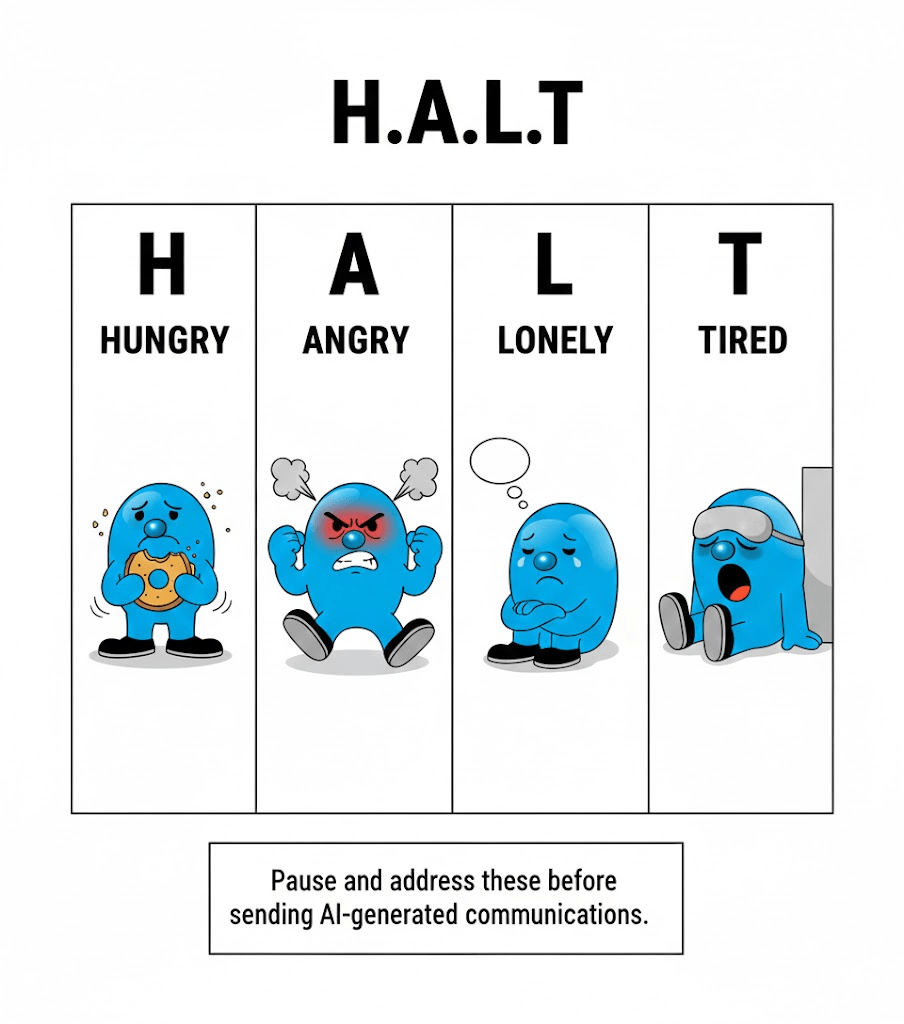
A simple grounding tool is the H.A.L.T. method, which reminds you to notice whether you are:
Hungry
Angry
Lonely
Tired
Any of these states can cloud judgment. If one applies, step back — have a snack, take a moment to breathe, talk to someone supportive, or return to the draft later.
Slowing down gives you space to decide whether the message reflects your intentions, values, and partnership with your child’s educators.
As you review AI’s suggestions, ask yourself:
- Is this respectful to everyone involved?
- Is it realistic for the teacher or coach (consider they have to manage many other children at the same time)?
- Does it protect my child’s dignity and well-being?
- Does it align with our family’s tone, boundaries, and values?
- Am I comfortable sending this message right now?
AI can support your thinking: you decide when and how to respond.
Thoughtfulness, not speed, is what strengthens communication.
Talking about this with your child
You might gently involve them by asking:
“I’m going to check in with your teacher about this. What would you like me to share?”
“Is there anything you want me to ask about for you?”
This models healthy communication and self-advocacy.
Tip for parents
If emotions are high, pause before communicating. Draft the message, step away, and return when you feel centred.
Clarity and kindness strengthen partnerships; urgency often clouds them.
AI can help you express yourself with calm and confidence.
It supports but never replaces your instincts, values, and relationship with the adults who help your child learn.
Was this guide helpful?
Let us know whether this article helped you.
Share this guide with other parents
Know a parent who would find this guide helpful? Enter their email address and we'll send them the Parent Conversation Guide directly.