Start with our AI Readiness Checker
AI is already part of your child’s learning. In just a couple of minutes, discover where your family stands and what to do next.
- ✓ Your family’s AI Confidence Score
- ✓ What you’re already doing well
- ✓ Simple, practical next steps
Why This Matters
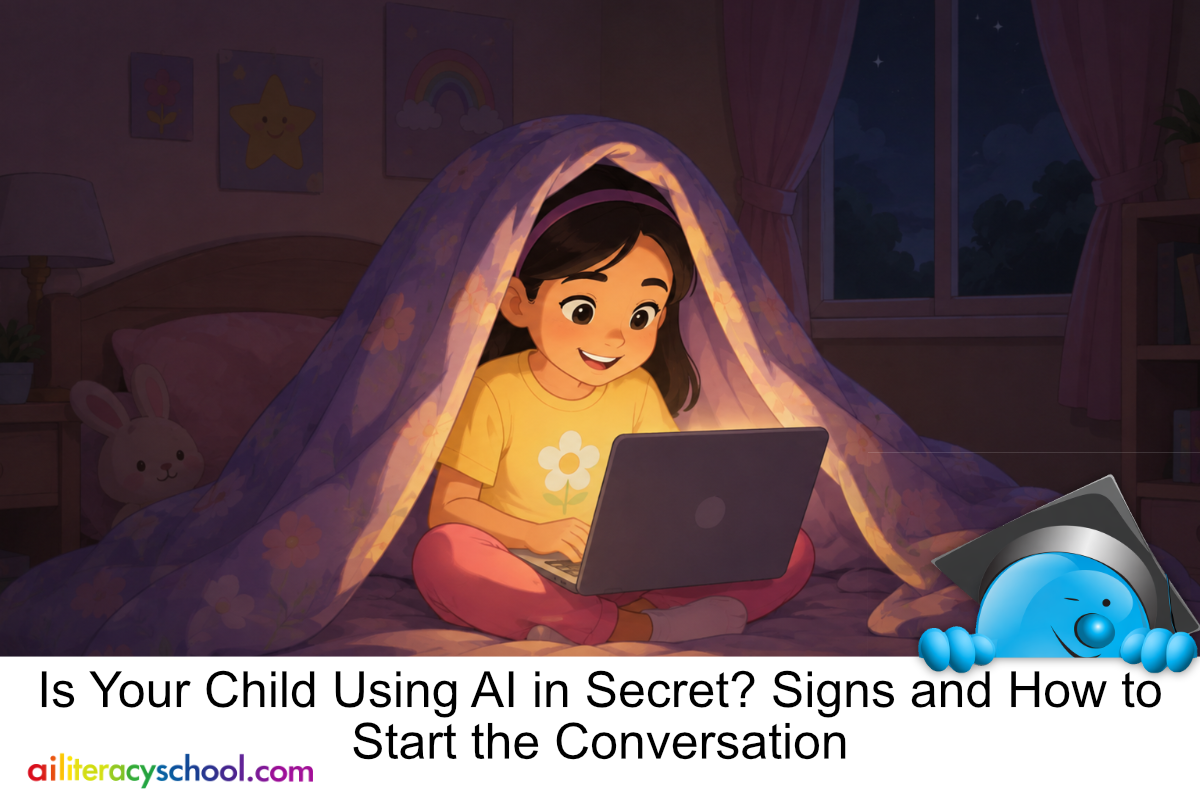
Children should not use AI if they do not fit with its age policy, but they may still do so. Children push boundaries, friends’ devices may not have the same safeguards you put in place, or they may use a tool they did not know was AI-based.
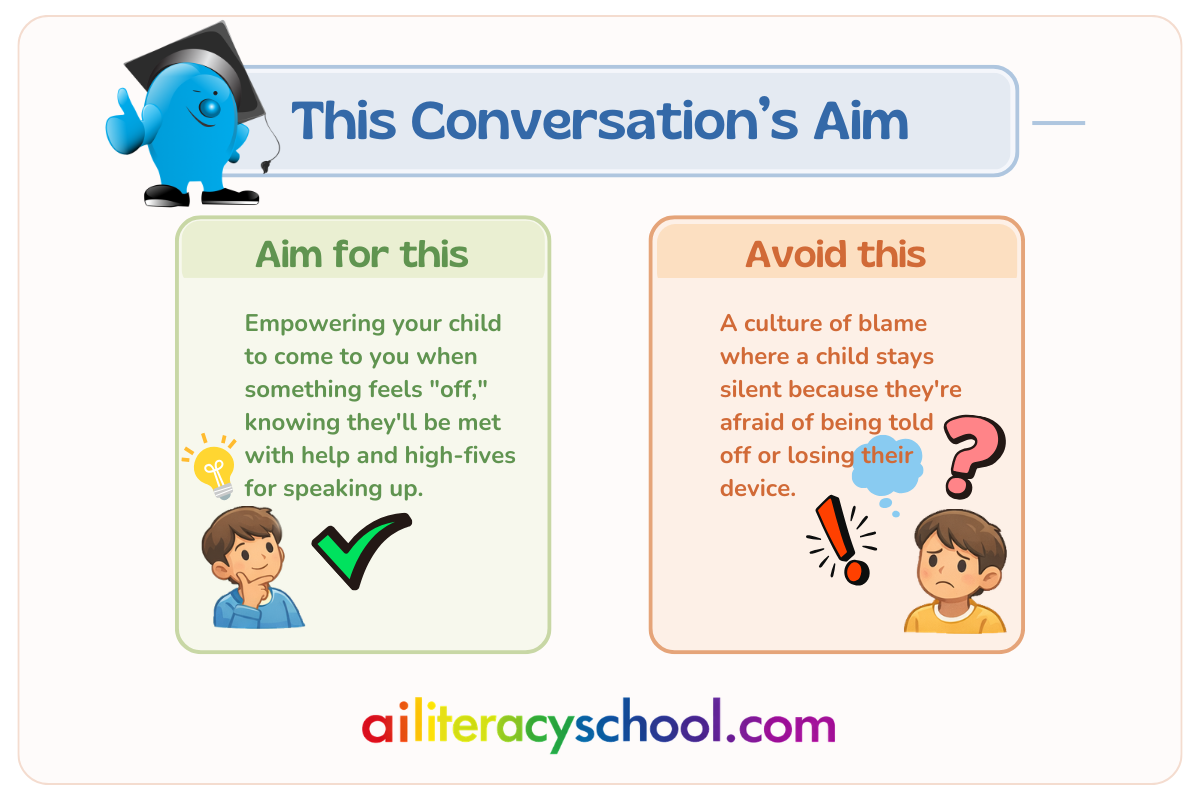
We need to prepare our children for occasions where they encounter AI outside the safety of your supervision or guardrails. A calm conversation at home helps your child know that they do not need to handle a strange or upsetting AI interaction on their own. It also helps them learn that speaking up is a good step, not something that gets them into trouble.
The Challenge
Many parents want children to be careful without making the subject feel frightening. You may also worry that if something does go wrong, your child will hide it because they think they will be blamed for clicking, typing, or staying too long.
This is why questions usually work better than warnings. A conversation that feels calm and open is more likely to help your child come to you later.
Before You Start
You do not need expert knowledge to have a useful conversation about this topic. Before you begin, it may help to remember:
- Children may notice that something feels wrong before they can explain why.
- A child may stay quiet if they think they will be told off.
- Short, simple safety habits are easier to remember than long rules.
- It helps to prepare children before a problem happens.
- Your calm reaction matters as much as the words you use.
- You are helping your child learn that speaking up is always the right thing to do.
Start By Asking
A good way to begin is to find out what your child already thinks. You could ask:
- “Have you ever seen something on a screen that felt a bit weird or confusing?”
- “What do you think you should do if an AI tool says something that feels wrong?”
- “Would you know how to tell me if something online upset you?”
- “What kinds of things might make a chat or app feel uncomfortable?”
- “What would help you speak up if you were not sure about something?”
- “Do you think children ever stay quiet because they feel worried about telling an adult?”
What Your Child Might Say
Children aged 7 to 9 may say things like:
- “I’d just close it.”
- “I might not know if it was bad.”
- “What if it was only a joke?”
- “I wouldn’t want to get in trouble.”
- “I didn’t mean to click it.”
- “I’d feel silly telling you.”
How To Respond
Try to reassure your child that telling you is always the right next step.
- If they say, “I’d just close it”: “That can be a good first step. Then you can still tell me, so I can help.”
- If they say, “I might not know if it was bad”: “That’s okay. You do not need to be sure. If it feels strange, you can tell me anyway.”
- If they say, “I wouldn’t want to get in trouble”: “You would not be in trouble for telling me. I want to help, not blame you.”
A Simple Explanation To Share
Once you have listened first, it can help to give your child one short idea to remember:
If an AI chat, app, or answer feels weird, upsetting, or unsafe, stop and tell a trusted adult. You do not need to work it out on your own.
Risks And Benefits To Mention
AI can be helpful because:
- It can answer questions and help with ideas.
- It can support learning and creativity.
- It can be fun to explore with an adult.
But it also needs care because:
- It can say things that are confusing or upsetting.
- It can give answers that feel too personal or uncomfortable.
- It can make children unsure what to do next.
Helping Your Child Stay Safe
For children aged 7 to 9, these are good basics:
- Do not use any chatbot without speaking to a trusted adult first.
- Stop using any app or website if something feels weird, upsetting, or unsafe.
- Tell a trusted adult, even if you are not sure what happened.
- Do not keep going just to see what happens.
- Remember that you will not be in trouble for speaking up.
Continue Your Learning
You do not need to know everything before talking with your child about AI. In fact, these first conversations often help parents notice where they would like more support.
AI Literacy School gives parents access to a growing library of guides and pathways designed to build confidence step by step. A subscription includes access to all pathways and guides, and starts with a free trial.
After this conversation, many parents may want to begin with the AI and Safety, Learning Pathway because this topic is mainly about helping children notice warning signs, speak up early, and feel safe asking for help.
If the conversation also raises questions about what children should share with AI tools, AI and Privacy may be a useful next step.
Tip For Parents: Put rules in place to keep your child safe, but recognise that sometimes things won’t go according to plan. Prepare children for these times and ensure you are ready to listen in a way that values their honesty.
Was this guide helpful?
Let us know whether this article helped you.
Share this guide with other parents
Know a parent who would find this guide helpful? Enter their email address and we'll send them the Parent Conversation Guide directly.