📑 In this guide
Start with our AI Confidence Quiz
AI is already part of your child’s learning. In just a couple of minutes, discover where your family stands and what to do next.
- ✓ Your family’s AI Confidence Score
- ✓ What you’re already doing well
- ✓ Simple, practical next steps
Why This Is Important
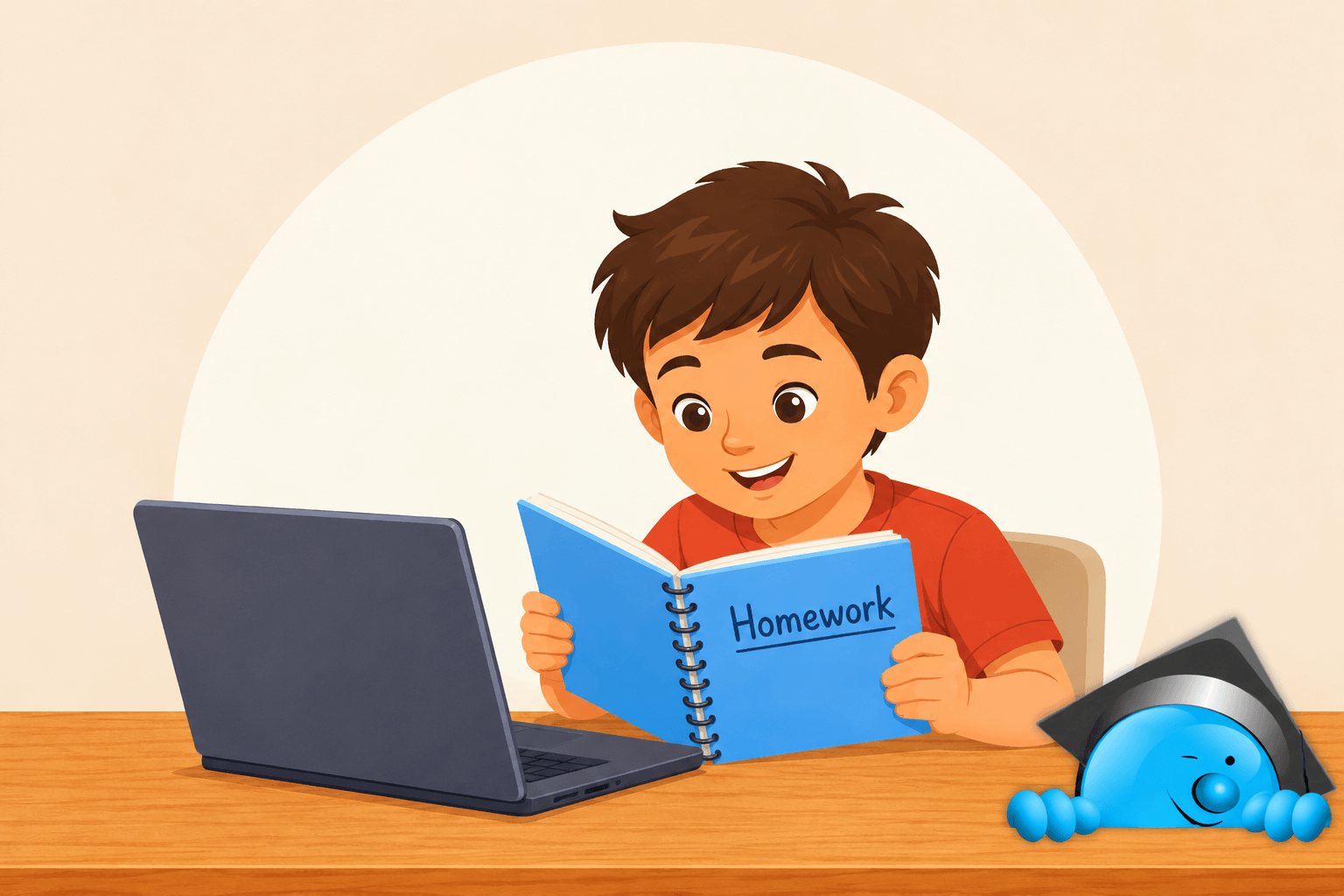
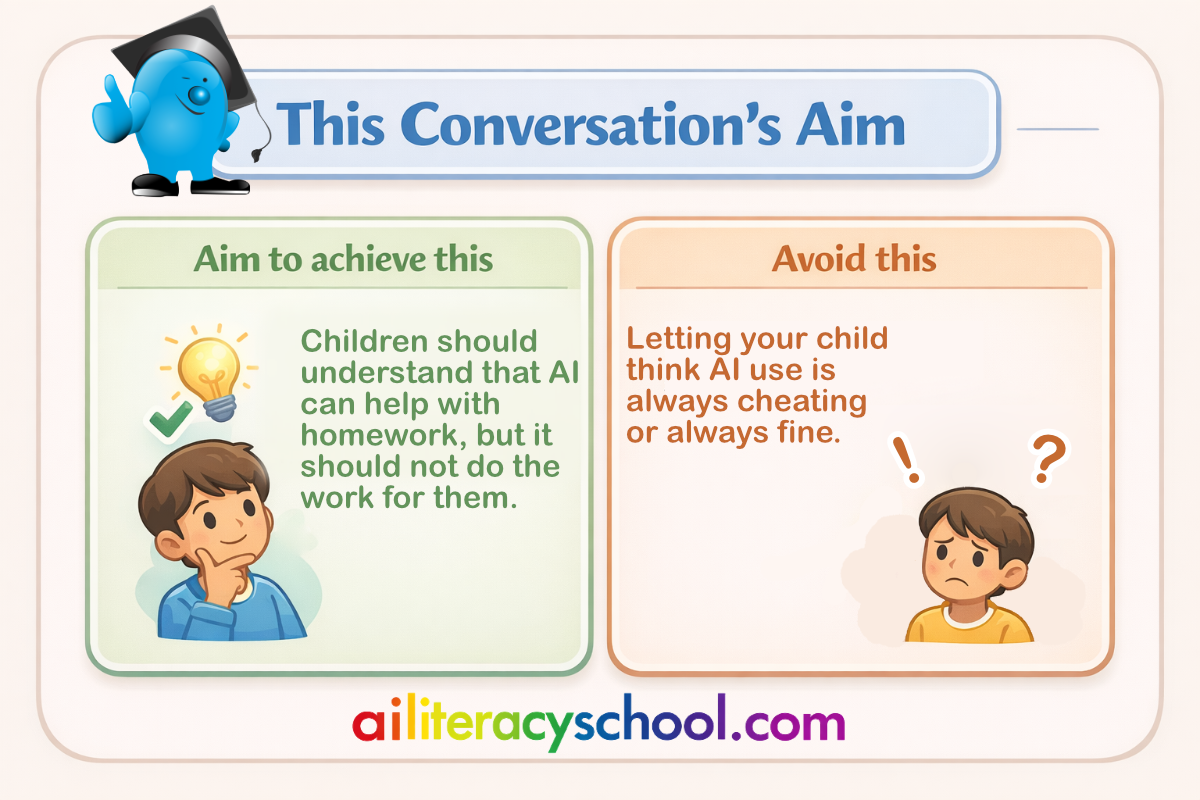
Children aged 7 to12 may start hearing that AI can help with homework, spelling, ideas, or explanations. They may see older children use it, hear classmates talk about it, or come across it through devices at home.
At this age, children often think in simple terms. If a tool gives an answer quickly, it can seem helpful without them noticing the difference between getting support and avoiding the work. A calm conversation at home helps your child understand that learning matters, not just finishing.
You may also find Is Your Child Using AI in Secret? Signs and How to Start the Conversation useful.
The Challenge
Many parents want to be fair and practical about AI without making homework feel tense or suspicious.
It can also be hard to know what counts as acceptable help. You may worry about sounding too strict, especially if your child says they were only using AI for ideas. It usually helps to begin with questions, so you can hear what your child thinks before setting rules.
Before You Start
You do not need expert knowledge to have a useful conversation about this.
Before you begin, it may help to remember:
- Children often care more about finishing than about how the work gets done.
- Your child may not yet see the difference between help and taking over.
- A child who says, “It was only for ideas,” may be telling part of the truth, not the whole story.
- Clear family expectations are easier to follow than vague warnings.
- A calm tone makes it more likely that your child will be honest.
Start By Asking
- “What do you think AI can help with in homework?”
- “What do you think it should not do for you?”
- “If a tool gives you a whole answer, is that still your work?”
- “What is the difference between getting help and copying?”
- “How would you feel if someone else handed in work they did not really do?”
- “What should you do if you are stuck on homework?”
What Your Child Might Say
- “It helps you get the answers faster.”
- “It is like asking for help.”
- “If I change a few words, it is my work.”
- “I only used it for ideas.”
- “I did not know that was wrong.”
- “Everyone will probably use it.”
- “It is okay if I am really stuck.”
- “I just wanted to finish.”
How To Respond
If your child says, “It helps you get the answers faster,” you could say:
“It might make things faster, but homework is also for practising and learning.”
If your child says, “It is like asking for help,” you could say:
“Some help is fine, but there is a difference between help and a tool doing the work instead of you.”
If your child says, “If I change a few words, it is my work,” you could say:
“Changing a few words does not make it truly your own if the thinking did not come from you.”
If your child says, “I only used it for ideas,” you could say:
“Getting ideas can be fine, but we still need to be honest about how much help was used.”
If your child says, “I did not know that was wrong,” you could say:
“That’s why we are talking about it now. The goal is to help you understand what fair use looks like.”
If your child says, “I just wanted to finish,” you could say:
“I understand that. But finishing quickly is not more important than doing your own learning.”
A Simple Explanation To Share
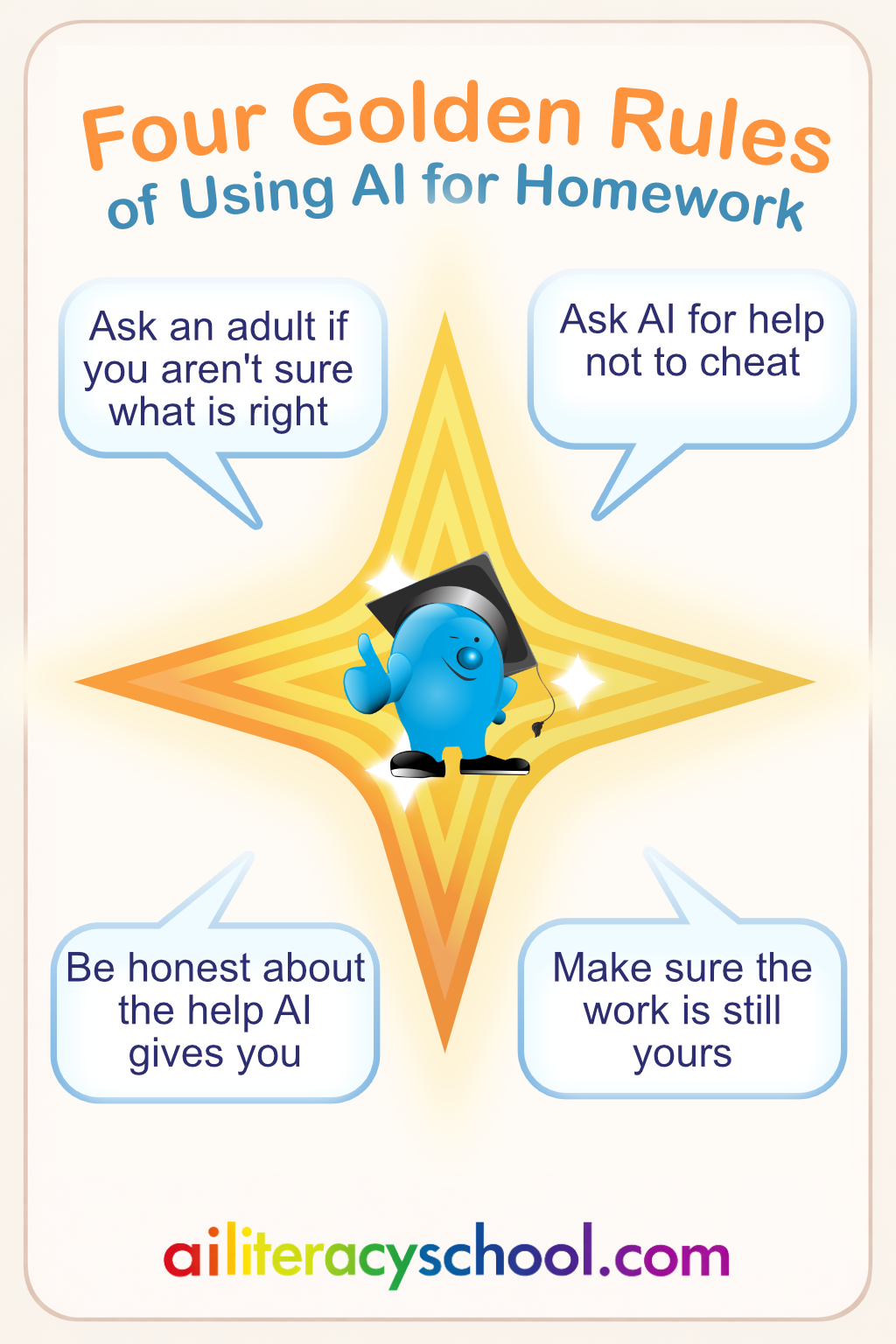
AI can sometimes help you understand a task, think of ideas, or explain something clearly. But homework should still show your own thinking, your own effort, and what you can do.
Risks And Benefits To Mention
You might explain that AI can be helpful because:
- It can explain a question in a different way
- It can help children think of starting ideas
- It can support spelling, word choices, or simple planning
- It can help when a child is confused and needs another explanation
But it also needs care because:
- It can do too much of the thinking
- It can stop a child from practising properly
- It can make work look better than the child can actually do alone
- It can make it hard for teachers and parents to see what help is really needed
- It can lead to dishonest habits if expectations are unclear
AI can be useful for homework support, but it should not take over the child’s work or hide what they can really do.
Talk About It
- “What kind of help would still leave the work as yours?”
- “What would be unfair to hand in?”
- “How can you tell when a tool is helping too much?”
- “What could you do before asking AI for help?”
- “If you used AI, what would honest use look like?”
- “What should our family rule be when homework feels hard?”
If Your Child Says Something Unexpected
They might say:
- “But you help me with homework too.”
- “My friend uses it all the time.”
- “The teacher will not know.”
- “Then AI is pointless.”
- “I already used it and handed it in.”
- “What if I was only a bit wrong?”
You could say:
- “Yes, adults can help too, but the goal is still your learning, not someone else doing it for you.”
- “Other children may make different choices, but we still need to decide what is right for our family.”
- “This is not only about whether someone notices. It is about honesty and learning.”
- “It is not pointless. It can still be useful when it helps you think rather than replaces your thinking.”
- “Thank you for telling me. Let’s talk calmly about what happened and what to do differently next time.”
If your child has already used AI in a way you are not happy with, try to stay focused on the next step rather than only the mistake. You are trying to build honesty and better judgement, not fear.
Helping Your Child Stay Safe
- Do ask for help from a trusted adult when homework feels too hard
- Do use AI for support, not for finished answers to hand in
Do be honest about how much help was used
Do stop and check if a tool starts doing the work for you
Continue Your Learning
You do not need to know everything before talking with your child about AI. In fact, these first conversations often help parents notice where they would like more support.
AI Literacy School gives parents access to a growing library of guides and pathways designed to build confidence step by step. A subscription includes access to all pathways and guides, and starts with a free trial.
You may find these pathways especially helpful:
- AI for Learning for understanding how AI can support children’s learning and how to guide effective, responsible use
- AI and Safety for understanding risks and helping children stay safe with AI
After this conversation, many parents may want to start with AI for Learning, because questions about homework often lead straight to questions about useful support, fairness, and what children should still do for themselves. If the conversation also raises worries about children relying too much on AI or using it secretly, AI and Safety may be a strong next step.
Tip For Parents
Set one or two clear family rules and repeat them calmly. For example, homework should show your child’s own thinking, and AI can help explain, but should not do the work. Clear expectations are often more useful than a long lecture after something has gone wrong.
Was this guide helpful?
Let us know whether this article helped you.
Share this guide with other parents
Know a parent who would find this guide helpful? Enter their email address and we'll send them the Parent Conversation Guide directly.